
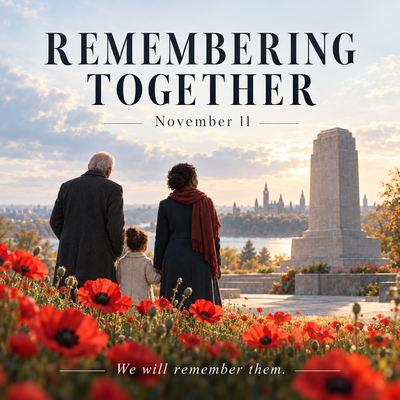
Remembering Together: Meaningful Ways to Observe Remembrance Day - November 3, 2026
Treasure Tower Rewards Canada Ltd. on 2026 Nov 1st
A time for reflection, gratitude and conversations across generations
A poppy on a coat. A name engraved on a memorial. A photograph carefully kept in a family album.
As November 11 approaches, these small details invite us to pause and consider the people behind them—their lives, their service and the loved ones who waited for them.
Remembrance Day is a time to honour those who died in service, recognize Veterans and those serving today, and acknowledge the sacrifices carried by their families. It is also an opportunity to reflect on the human cost of war and the importance of peace.
Whether you attend a ceremony, share a family story or quietly observe the day at home, remembrance can be meaningful at every age.
Pause for Two Minutes
At 11 a.m. on November 11, Canadians are invited to observe two minutes of silence. It is a shared moment to remember those who lost their lives in service and reflect on what their sacrifice means.
Wherever you are, make space for that pause when you can. Put down your phone, step away from everyday distractions and give the moment your attention.
If children are joining you, explain beforehand why everyone will be quiet. A simple explanation can help them participate with understanding: “We’re taking a moment to remember people who served and those who died.”
They don’t need to understand every detail of history to begin learning what remembrance means.
Attend a Ceremony Together
A community ceremony offers a place to remember alongside neighbours, families, Veterans and serving members.
Consider attending with a friend, child or grandchild. Arrive early enough to settle in, dress for the weather and allow time afterward for conversation.
If attending in person isn’t possible, watching a televised or online ceremony can also provide a shared moment of reflection at home.
For children, the experience may bring questions. Why are wreaths being laid? What does the music mean? Who are the people wearing medals?
You don’t need every answer immediately. Saying “Let’s find out together” can be the beginning of a thoughtful conversation.
Let a Poppy Begin a Conversation
Wearing a poppy is one way to express remembrance. Veterans Affairs Canada includes participation in the Royal Canadian Legion’s Poppy Campaign among its suggested ways to remember.
Rather than treating it as simply something we wear each November, take a moment to talk about why it matters.
Ask children what they have learned at school. Share what wearing a poppy means to you. If your family has a connection to military service, this may be an opportunity to introduce that history.
A small symbol can open the door to a much larger story.
Share Stories Across Generations
History can feel distant until it becomes connected to a person.
Perhaps your family has letters, photographs or memories of someone who served. Spend time looking through them together. Read a name aloud. Notice how young someone looks in a photograph. Talk about the life they had before, during and after their service.
If a Veteran or family member wishes to share their experiences, listen without rushing or pressing for difficult details. Some memories are painful, and some people prefer not to speak about them.
Gentle questions can leave room for the person to choose what they share:
-
“Is there someone you would like us to remember?”
-
“What would you like younger generations to understand?”
-
“Are there photographs or stories you’d like us to keep?”
With permission, write down those memories so they can be passed on.
Learn About One Person
The scale of war can be difficult to comprehend. Learning about one individual can make remembrance more personal.
Choose a name from a local memorial, explore a museum exhibit or read a service member’s story through Veterans Affairs Canada.
Look beyond dates and battles. Where did that person grow up? Did they have siblings? What work did they do? Who missed them?
For a family without a military connection, this can be a meaningful way to participate. We do not need to have known someone personally to care about their life.
Give Children Room to Reflect
Children express understanding in different ways. Some ask questions; others prefer to draw, read or listen.
After learning about Remembrance Day, invite them to write a few thoughtful words, create a remembrance drawing or share something they learned.
Keep conversations appropriate to their age, answering honestly without overwhelming them with distressing detail. Make room for questions about kindness, loss, service and peace.
The aim is to help them understand that the people we remember were real people, with families, friendships and hopes of their own.
Carry Remembrance Beyond November 11
Remembrance need not end when the ceremony does.
Continue learning. Preserve a family story. Visit a local memorial at another time of year. Consider supporting an organization that assists Veterans and their families.
Most of all, make time to listen when someone chooses to share.
This November 11, we can remember together through quiet attention, thoughtful conversation and a willingness to learn. Each name we read and each story we preserve helps ensure that a life is not reduced to a distant date in history.
We will remember them.