
National Day for Truth and Reconciliation: The Story Behind the Orange Shirt - September 29, 2026
Treasure Tower Rewards Canada on 2026 Sep 27th
On September 30, people across Canada wear orange shirts. You may see them in classrooms, workplaces and neighbourhoods, or notice an orange shirt in a window. Each one can open a conversation. But the meaning of the day begins with listening to the people whose lives were changed by residential schools.
September 30 is both Orange Shirt Day and the National Day for Truth and Reconciliation. It is a day to honour residential school Survivors, their families and communities, and to remember the children who never returned home. It is also a day to recognize that the effects of residential schools did not end when the schools closed. Families and communities continue to live with their legacy.
Why an orange shirt?
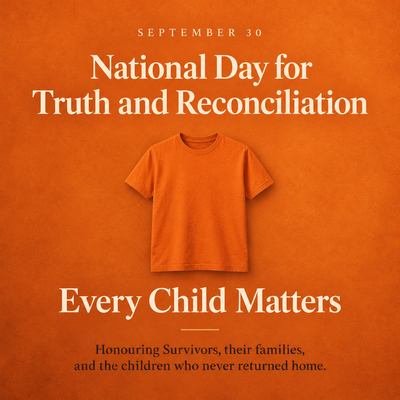
Orange Shirt Day grew from the experience of Phyllis Webstad. When she was six years old, her grandmother bought her a shiny new orange shirt to wear to school. Phyllis was excited about it. But on her first day at a residential school, the shirt was taken from her.
Phyllis shared that memory years later. Her story helped inspire Orange Shirt Day and its message: Every Child Matters. The shirt represents more than an item of clothing. It reminds us of what children lost when they were separated from their families, languages and cultures—and of the care and dignity every child deserves.
The first Orange Shirt Day was held in 2013. September was chosen in part because it was the time of year when many children were taken from their homes to residential schools. What began as a community-led effort to share Survivors’ experiences has become a day observed across Canada.
Why September 30 matters
The National Day for Truth and Reconciliation was established in response to one of the Truth and Reconciliation Commission’s 94 Calls to Action. Call to Action 80 asked for a day to honour Survivors, their families and communities, and to keep the history and legacy of residential schools in public memory. The national day and Orange Shirt Day are now observed together on September 30.
For someone learning this history for the first time, it can be difficult to know what to say or do. A good place to begin is to make room for the truth. Learn about the residential school system. Listen when Survivors choose to share their stories. Seek out the voices and work of First Nations, Inuit and Métis people. Remember that no one person’s story can speak for every Indigenous community.
It is also important to remember that September 30 can be painful for Survivors and their families. The day calls for care and reflection. Wearing orange can show support, but the deeper meaning comes from understanding why we wear it.
Talking with children about the day
Children may ask why so many people are wearing orange. We can answer honestly, in words suited to their age: many Indigenous children were sent to schools far from their families where they were treated unfairly and harmed. Some never came home. We wear orange to remember those children, honour the people who survived and affirm that every child matters.
That conversation does not need to explain everything at once. It can begin with a child’s question, followed by listening, reading together and learning more over time. The Orange Shirt Society and the National Centre for Truth and Reconciliation offer resources that can help families and educators approach the subject with care.
Carrying the learning forward
There are many ways to mark September 30. Wear orange and learn the story behind it. Attend a local event organized by Indigenous people. Read a book by an Indigenous author or listen to a Survivor’s account when it has been shared publicly. Explore the Truth and Reconciliation Commission’s Calls to Action and consider what they ask of our communities and institutions.
No single gesture completes the work of reconciliation. September 30 gives us a moment to pause, remember and learn. What we do with that learning—on this day and throughout the year—matters too.
Every Child Matters.